There are moments on the road where everything goes quite. The wind roars and weaves its ways along the cars seams, tearing at the rubber sealant around the windows. Clawing, at the great flank of its blue-gray clearcoat. The rubber grooves of the tires zigzag rapidly as they plunge down into the midnight tar of a newly laid interstate. Liquefying from the limitless yellow sun, which pins down the sky above you like cheap ultramarine siding; Painted over, as an afterthought, with white-primer clouds. Which, just like you, seem to hurry away from the unforgiving expanse of beat brown rock, brown grass, and brown cows. All of it, in its entirety, crescendoing into a single roar. That bit, by bit, by bit, fades away into a blissful nothingness.
Its just you. Your friend has fallen asleep. You passed the last RV 40 miles ago. The navigator displays 326 miles until the next exit. The road abstracts, three colors: brown, black with its thin line wandering through hills all the way up until it hits the tired blue. An escape to what? You wonder. Softly, softly, the mind goes blank. There is nothing to do but to keep pressing on the accelerator. Just like that 2 hours pass. For a moment, you did not exist.
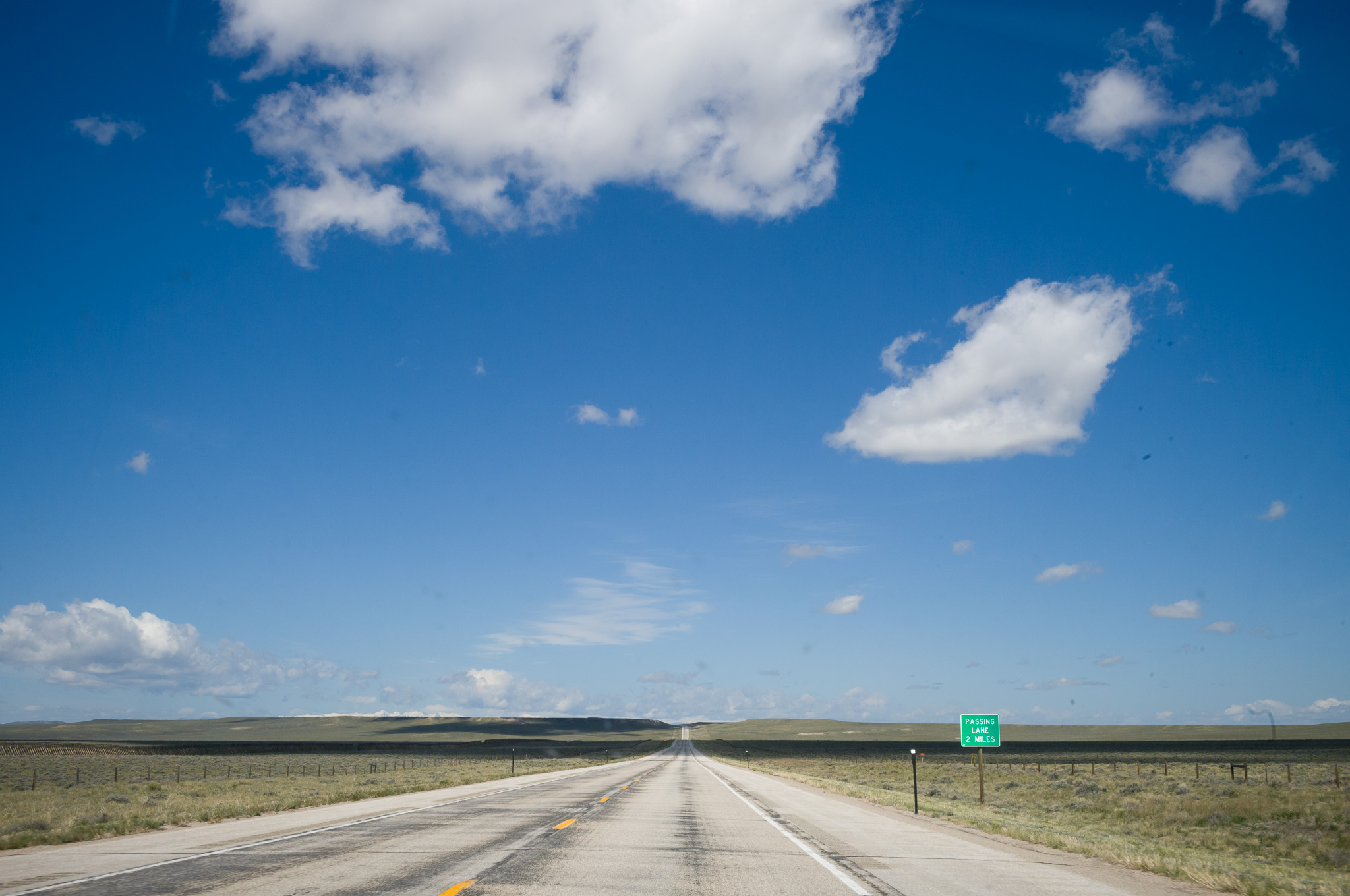
The great American expanse is not characterized by its National parks, small beat down towns, or suffering Midwest cities. It is characterized by the sheer scale of its in-between. The rolling hills of corn fields, mountains, in strict formation filling the horizon, the city-sized picket line fences, traveling with you down every road and every destination.
I had the opportunity to travel across the United States, all 3000 miles of it, twice. My cars odometer had an accumulation of ten trips to the grocery store and my experience was dwarfed by the time I spent driving for my license. The first leg of the journey I began alone. It was a 6 hour drive to Nashville, home of the Honky Tonk and recession special.
Honky Tonk stood for a good bar and good country music. In Nashville, the neon boot struggled against the corrugated exterior of a trendy club, palm trees peeking out from the rooftop, a tropical rejection of the weathered neon tubes of green, pink, yellow and blue. I spent a night in Nashville and had the Recession special at a notable Honky Tonk, a PBR, moonpie and a Baloney sandwich. Everyone was dressed in cowboy hats and boots. The music filled you with the sense of unknown nostalgia. The strums of the guitar with the plain voice bellowing out over the dimly lit bar. Over its worn down seats and creaking floor. It felt bittersweet to sit there, I knew it was a faintly shimmering mirage that clung onto an era that was long over. Its end had already passed and what I saw was an echo of an echo in the great big tunnel of time.
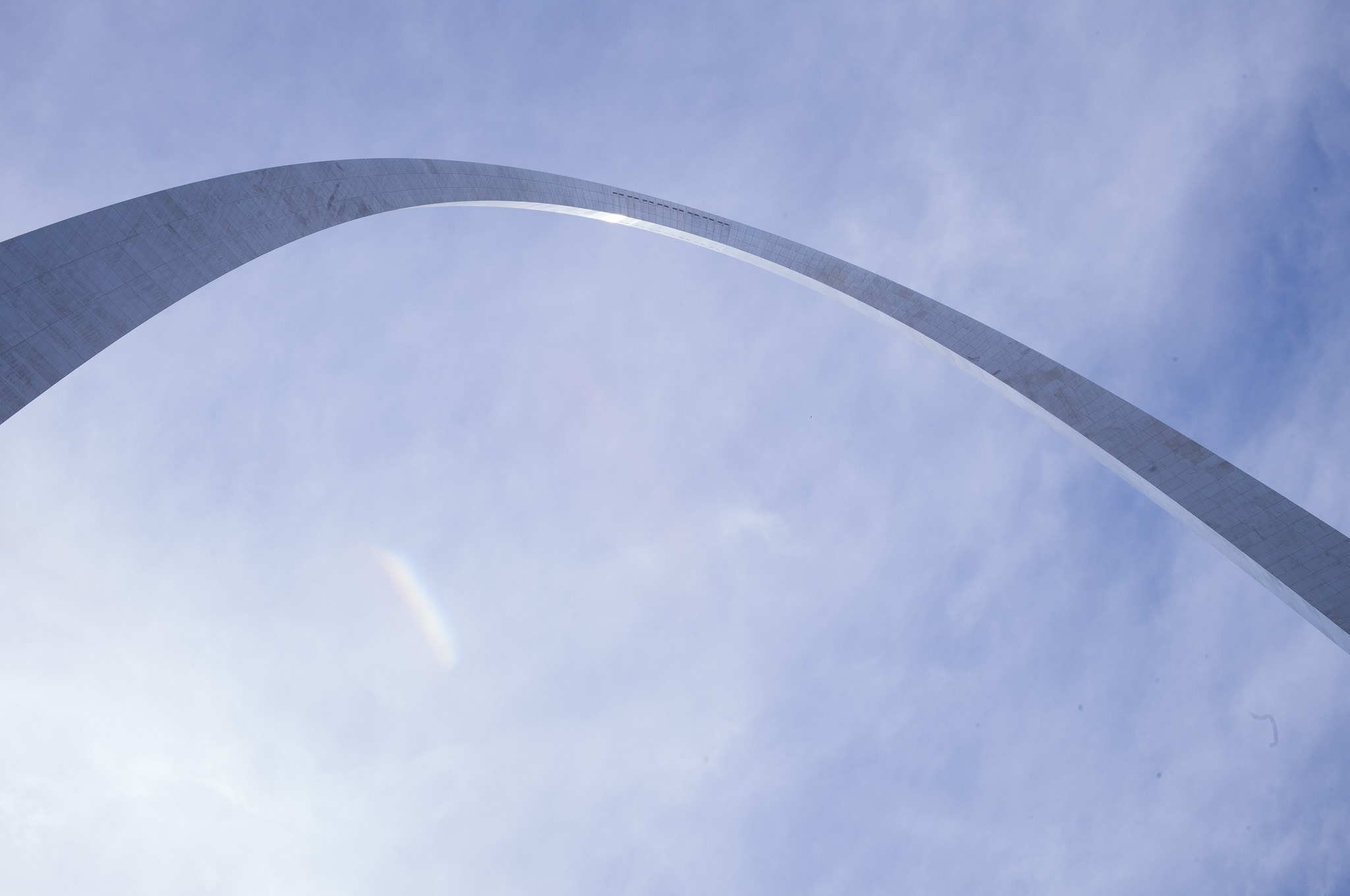
I remember 3 things from St. Louis, decay, a pristine courthouse and the thin metallic strip piercing the sky. When picking up my friend from the airport we drove through the aftermath of a hurricane. It had happened just a day prior. The traffic lights were all dark and debris lay strewn over the road. We passed no one as we drove into the city. We wondered if anyone had ever lived in that big city on the river.
After spending the night we drove to Kansas. It was the end of spring and the start of summer, the best time to run into a tornado. After a dry hot evening playing pinball in Kansas city we made our way out into the great Kansas plains. On the highway, a weather alert forecasted golf to tennis ball sized hail and a tornado. Caught in-between our destination and a monumental storm front, we decided that luck would be certainly on our side. We drove right into the center of the warning realizing unfortunately that the old cardboard motel would be were we would spend the night. The next day, a nearby town was completely leveled by the storm. I felt pessimistic about this whole journey. The mystique of the great American West felt threadbare. It did not have the promise of an endless adventure. The tornado, unseen by us felt as ordinary as the one from Wizard of Oz. It was in my mind a fact that Kansas would have tornados. So when one happened to come across our path, my reaction to it was indifference.
Boulder had an epileptic mix of retired hippies, students and software engineers. It was plainly commercialized and regurgitated into an amalgamation of no substance. Clean white store fronts sold yoga pants and candles, the wonderfully maintained park was full of the homeless. The next stop was Rawlins, Wyoming. Out of all the places I visited it felt the most isolated. A strong constant wind would wind its way down the main street and then would get lost in the endless plains of grass.
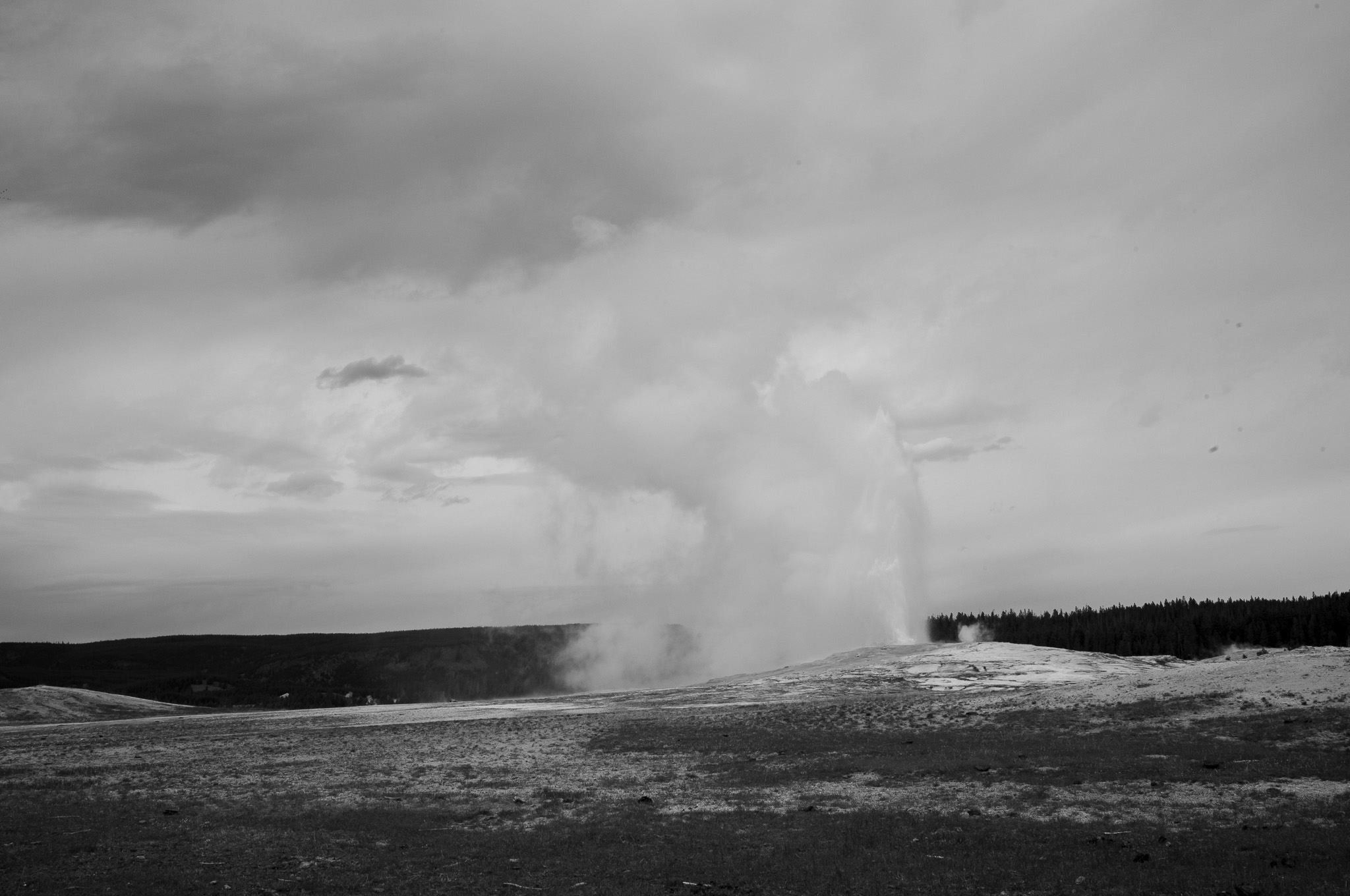
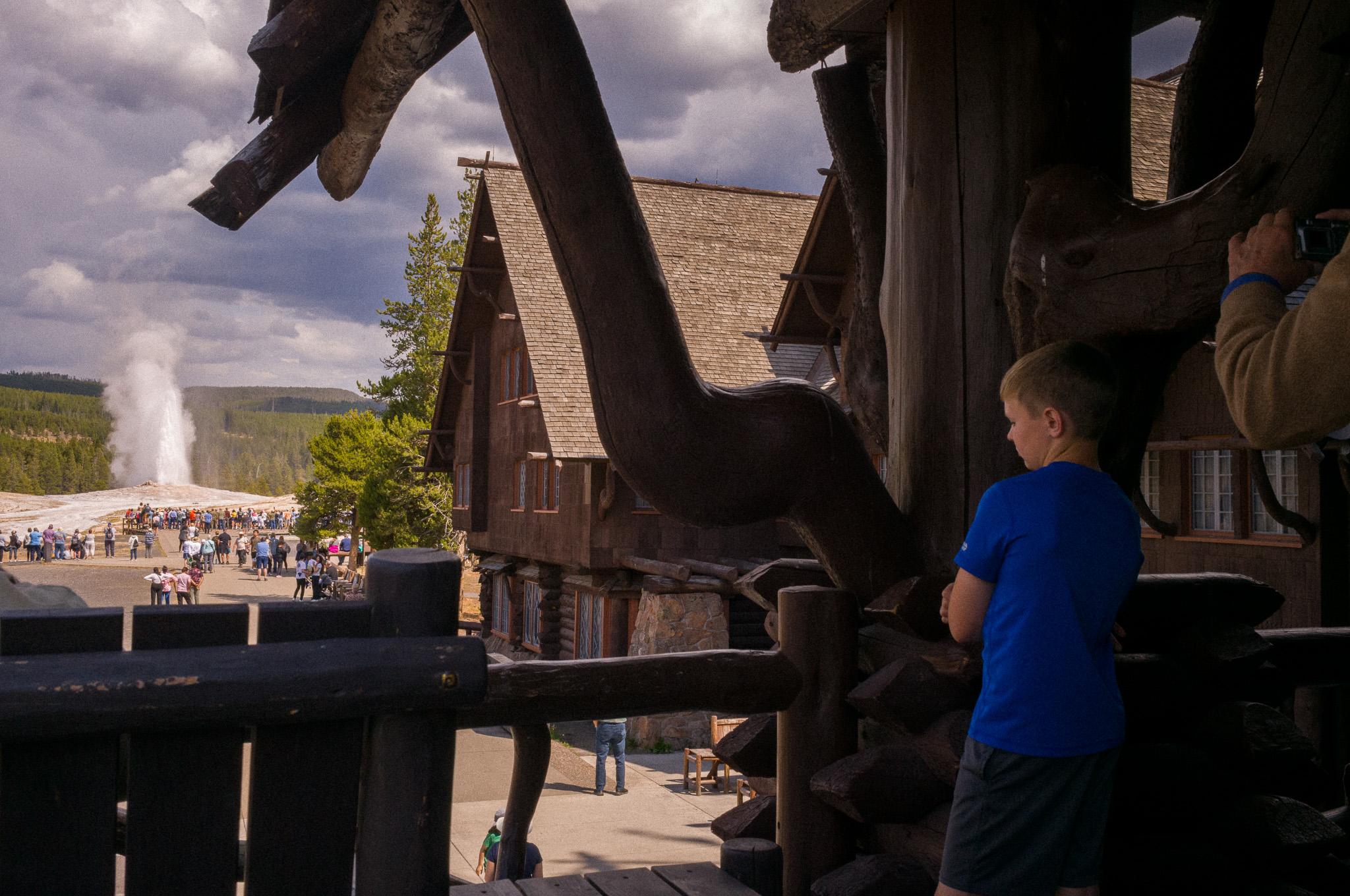
The Tetons were magnificent, the most awe inspiring mountains I had seen in North America. The photographs were incredibly boring. Picture perfect, not a replica of the mountains but of the millions of photos taken of them. The awe I felt was replaced with the indifference I felt from a photo in a Instagram feed. Yellowstone reeked faintly of sulfur and a bygone America. The first American National Park, it was strangely underwhelming. Old faithful, the largest geyser of the park, blended with rain clouds as it erupted into the sky.
Photography; Art is absolete
“I know, however, of a young chronophobiac who experienced something like panic when looking for the first time at homemade movies that had been taken a few weeks before his birth. He saw a world that was practically unchanged-the same house, the same people- and then realized that he did not exist there at all and that nobody mourned his absence. He caught a glimpse of his mother waving from an upstairs window, and that unfamiliar gesture disturbed him, as if it were some mysterious farewell. But what particularly frightened him was the sight of a brand-new baby carriage standing there on the porch, with the smug, encroaching air of a coffin; even that was empty, as if, in the reverse course of events, his very bones had disintegrated.”
― Vladimir Nabokov, Speak, Memory [2]
As town by town flew by the bug splattered windshield I wondered if art was dead. Photography was a hobby I picked up in 2020. My first year in college and the year Covid was in full swing. It was enabled by a good deal on a used Pentax Spotmatic film camera which promised full manual control and an integrated light meter. My desire to photograph was overshadowed by a curiosity in its mechanical operation. I wanted to experience and understand the chemical entrapment of light.
Results: the images, were a clean extension of the experience of using every mechanical dial on the camera. They would also become, as it has for nearly everyone, a convenient tool to document vacations. A symptom of a certain guilt I felt for not drawing, writing or documenting in any way my experiences. This, further stemming from a fear of forgetting and thus loosing any tangible “value” of going somewhere in the first place. The promise of guaranteed productivity and purpose on any vacation was too tempting to refuse. Any trip could be carefully arranged around the photogenic and be guaranteed to be successful. Success became measured by how many photographs I took.
Drawing took time and effort. Neither of these are a factor with taking a picture. Time is subdivided into unimaginably small increments, 1/500, 1/1000 of a second. It takes less time to take a photograph then to blink. Importantly, I shed responsibility for the result. A drawing that turns out poorly is an unreasonable cloud that hangs over me. I hold full power over the world appearing on the smooth Bristol sheet, any error is of my own creation. The feeling of spending hundreds of hours on a drawing only to look at the final result, disappointed. Is what I think a farmer feels when one of their prized milk cows breaks its leg. In contrast, a picture that’s unappealing has an endless list of excuses: the harsh light of noon, a backlit subject, a malfunctioning light-meter, a lack of appealing subjects. The photographs creation is at the whims of the world as much as the photographers skill. Even the best photographer will have hundreds of blurry shots and underexposed negatives.
Photography has tried and failed to build up its schools of thought. At the end of the day even the most skilled photographer has no idea which button press produces their museum piece. This is because capturing reality is fundamentally different from reproducing it. Paintings can be seen as a representation of reality, a proxy. Photographs however are reality. They come into existence through a chemical, or digital process the photographer has no input over. After the photographer presses the shutter they have as much agency over their image as a moth seeing a streetlight overhead.
Eventually, my memories became defined through images. Every location was captured in a chemically perfect slice of color pigments. An index into my past. How mundane did life appear as a series of pictures marked with date, time and location. Blurry memories made sharp enough to cut.
I do not know what I want from photography. In moments, I feel a duty to document for my future self. Some things, most things, feel too precious to never see again. It is the inescapable sense of the finite. The sand castle crumbling over and over again, decaying building after decaying building. A dying town propped up by a disappearing mining industry. The fir tree growing bit by bit, surpassing the perfect size for a Christmas tree.
The photo, like a sleeping toad, buries itself into the silty layers of times river. Among the past, it gently nestles and sits. A hand plunges down, clouds erupting, propelled into the surface. It stares at you blankly, squirms. Its webbed leg caught between your fingers, it hangs on by a thread. Then drops. Its reflection flying towards the crystalline surface until it shatters in a tremendous splash. Ripples emanating outwards, you remember the smell of that summer afternoon. Photograph, outpaced by time pulls you downwards through its currents.
The Modern Age
“What could be more surreal than an object which virtually produces itself, and with a minimum of effort?” - Susan Sontag [4]
Movies, films, have an interesting way of fitting into the world of photographs. Film exists as a series of images, playing it rapidly results in a moving picture. The picture then represents a larger moment in time. Instead of a slice, we are granted a cake. The perspective, while still limited expands. It shows the shift of a smile into heartbreak, the waves of grass buffeted by wind. Instagram, Tiktok, Sora 2 democratize this miracle. They annihilate the barrier to entry like thermonuclear missiles. A couple button presses is all it takes to not just capture reality but to regurgitate it anew through trillions of layers of transistors.
“That most logical of nineteenth-century aesthetes, Mallarme, said that everything in the world exists in order to end in a book. Today everything exists to end in a photograph.” - Susan Sontag [4]
The truth of the quote has changed medium twice since it was written down by Susan Sontag in 1977. With the advent of short form video in Vine (2012-2017) and then later TikTok (2017-Present), everything began to exist in order to end in a video. With the advent of AI, it seems that we no longer even need to capture the world. Everything society cares about already has been put into countless books, photos, and videos. We can now recreate the world freely without ever seeing it. Society becomes an ouroboros eating its own tail.
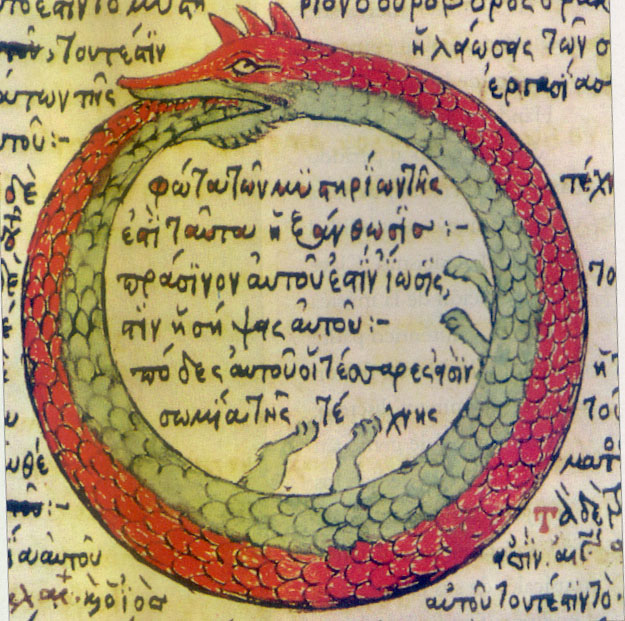
Drawing of the Ouroboros, 1478 [3]
Reality, becomes a shadow of its image. During Covid, isolation was a requirement. We entered wholly, Plato’s cave. The only interaction with the outside came through a monitor. Its function: to expose images as rapidly as possible on the cornea of your eye. What happens then, when the image is more real then reality?
The collapse was already coming. As soon as photographs began to exist it was clear that they would eventually win the war over art. Generated images and videos are a disjoint digital child of the photograph. They mix and blend and mutilate the shards of reality through their transistor meshes. They do not even require the photographer to go somewhere, to see something, they simply require a line of text. This brings us to the extreme end of Surrealism. Where as before Surrealists struggled to sufficiently alienate their subjects, the alienation of AI is guaranteed. Anything produced does not exist, and unlike painting and other fine arts, the produced image is now indistinguishable from reality.
Who needs the artist, who needs the photographer, who needs the director? Everything is now a binary 1 or 0. Recorded in mineral. Ask the magic mirror on the wall for anything you desire. It will comply.
The mundane
“One needs a camera to show patterns in the ‘dull and marvelous opacity’ called the United States.” - Susan Sontag [4]
“The cradle rocks above an abyss, and common sense tells us that our existence is but a brief crack of light between two eternities of darkness.” ― Vladimir Nabokov, Speak, Memory [2]
The last stop before home was a mining town called Butte. A murky ghost on the horizon, it quietly embraced the march of time. Mining, the driving force of its economy, blasted out a significant pile of historical debris onto the hills surrounding the 1 mile wide Berkley Pit. The debris leftover from this great mining exploit was significant enough to form the largest historical district in the United States.
When we arrived in the evening, everything was saturated with a milky white fog. There was no one around. We entered the hotel lobby with a high ceiling, pastel pink walls and crystal chandeliers. The hotel receptionist, a lady as old as the interior around her, slid us the keys over the granite counter. Their green, plastic diamond-shaped labels flashed in the light. We boarded the elevator which shook its way up to the third floor. Out of our rooms window shone a neon pink sign. It prefaced the name of our hotel with new in an attempt to claim superiority. The marketing attempt was in vain however, the hotel now only served dust-mites at the reception. For dinner, we made our way to the Irish pub. The day ended with someone’s birthday celebration.
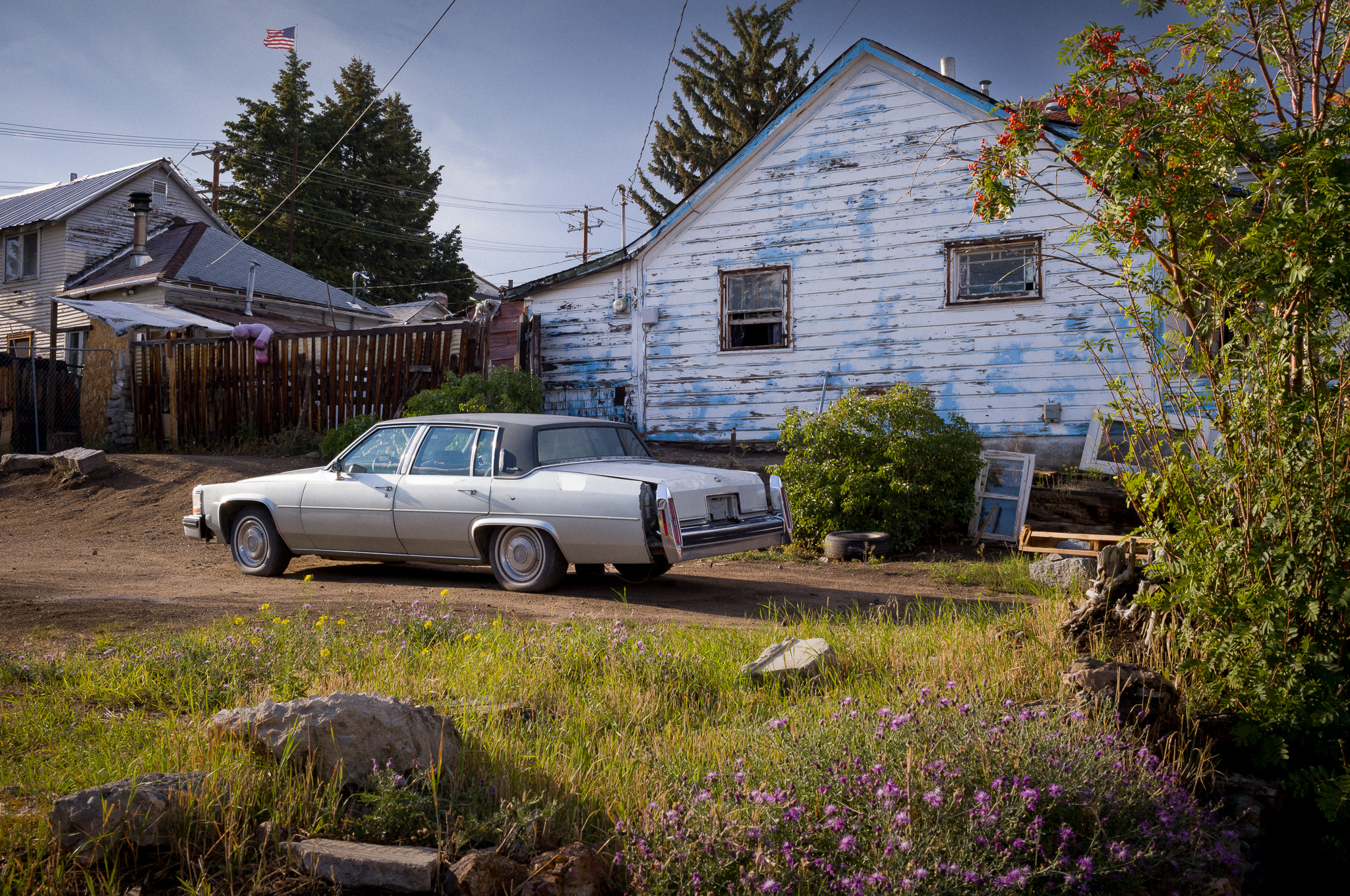
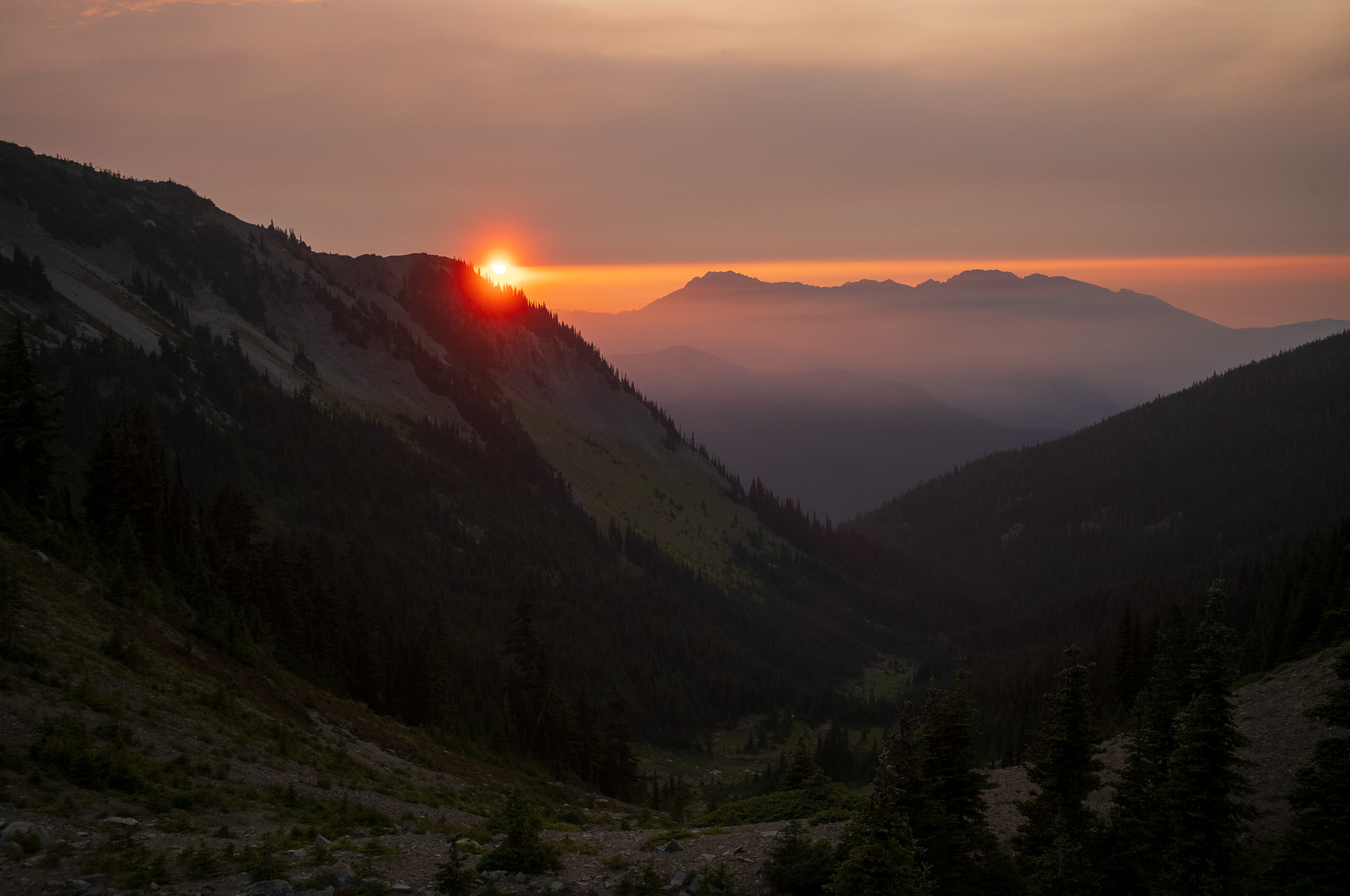
Back home, my first daily 30 minute commute to work felt brief with the overwhelming scale of America. The mundanity however, felt the same. Summer was over in an instant. Condensed into weekends and routines. When the month of July teetered its way into August I went on a backpacking trip in the Olympics. My most notable memory from it was sitting on a boulder overlooking a vast forested valley. The sun dipped into the smoky haze, turning a deep blood red, wrapping trees, boulders, wildflowers and the whole of the valley in a soft red glow. Everything was still, the wind held its breath. I drafted in the lines of the scene in my notebook. I drew with an empty mind, my future for the temporary span suspended in that crimson afternoon.
I do not remember the last time I was bored. At some point, my in-desire to sit still was replaced with a sullen contentment. An acceptance, to a degree, of what happens. The 30 minute commute seemed inconsequential. I got in the car, drove, sometimes with a podcast, down the highway. Then suddenly it was lunch break at the office. Memories reduced themselves to black and white static of the everyday. What terrified me the most is that it felt perfectly normal. Normal to get up and repeat the prior day. Repeat the prior day and continue moving forward. I took no pictures during the week, routine was not meant to be captured by its participant.
I could not understand my terror. While it stemmed from loosing freedom, it was difficult to determine what I needed the freedom for. I had no grand ambitions in my childhood, I was not the one who would confidently say they wanted to be an astronaut. Back then, I had more important things to think about. Like if the windstorm had knocked down any trees in the forest that might be advantageous for building a new hideout. Only in Highschool did it cross my mind that after the convenient linearity of standardized education. The future had a frightful absence of straight lines.
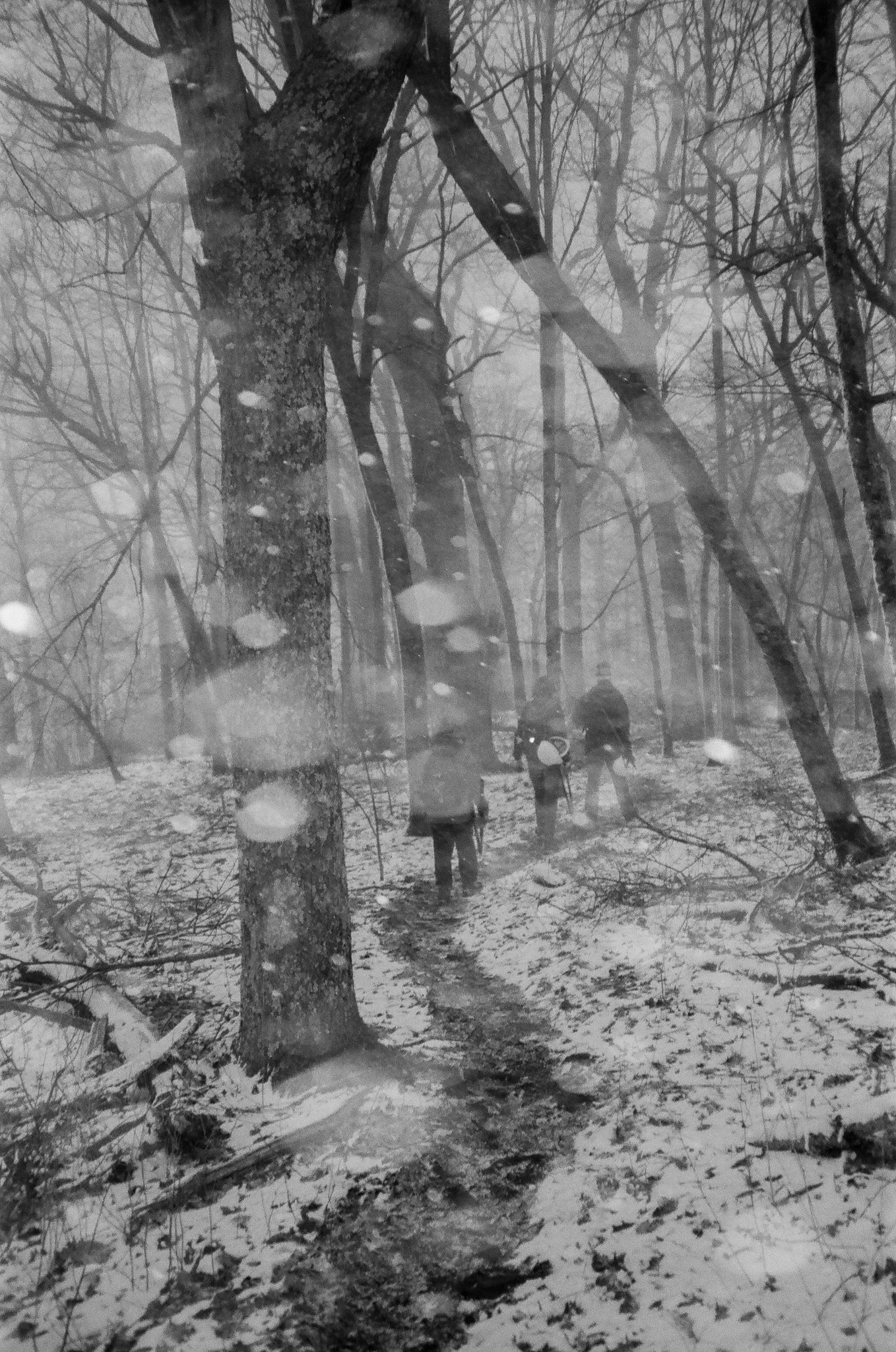
My attitude however, did not change after this revelation. My father was a computer scientist, computer science would make me a lot of money. Also, I played video games on the computer all the time, surely I must like computers! After this thorough weighing of all possible positives and negatives I decided that I too, would become a Computer Scientist. I was naive, and yet in my 6th year of college education I still have no better answer. I continue with this choice as it paints my future with a wonderfully straight and black line. It propels itself into the horizon, straight up into the tired blue of the sky. Who needs fortune tellers when the future is so easy to see!
Yet the terror persists. It gnaws away at its protective lining in my brain. It asks why I do anything other then computer science. What are these pointless hobbies which oh so greedily waste away your precious time. Time is a limited resource you know! How dare you read that book for hours by the window. How dare you spend the afternoon finishing a drawing. How dare you waste your time typing this blog no one will ever read? You chose your discipline, you should stick to it! It will be the majority of your life you know? You are not searching for a job? What is wrong with you! Do you want to be unemployed!? I whisper yes in answer. It is right, I have to be practical. The line will not be straight without effort. What else could I possibly want to do? You did not come up with an answer? You had 6 years!
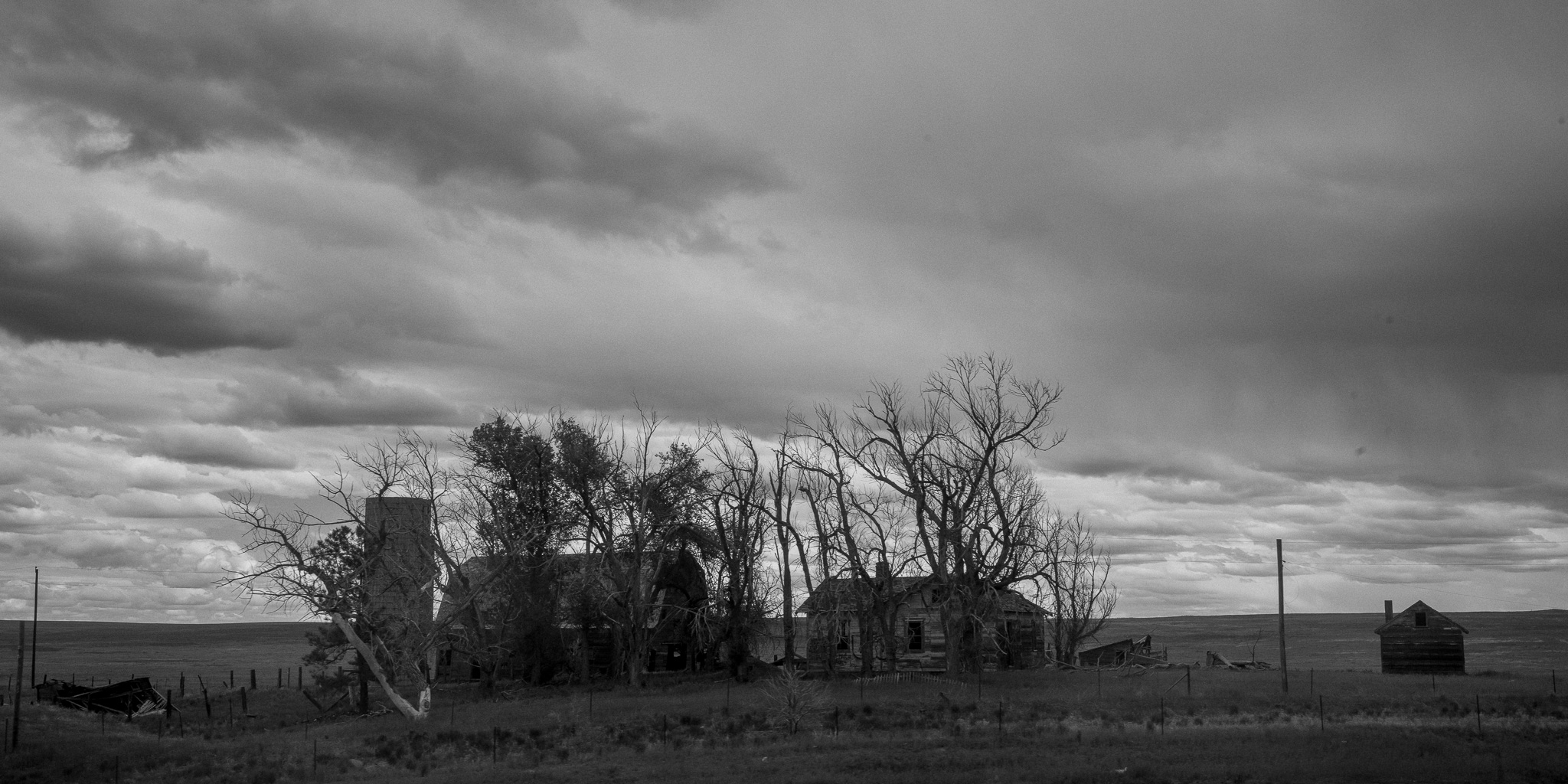
The return trip was buoyed by optimism. I did it, I worked the entire summer away. I deserved this week long journey back. I, was going to make the most of it. I, will document these delapitated buildings, solemn mountains and pastoral fields. See how productive I am even on vacation! The terror subsides. The black asphalt road gleams. Straight up the mountain into the sky. We drive through a wildfire. Tar black fields, a solitary tree goes up in bright orange flames. I take the photos, I capture history!
At Yellowstone, Old faithful erupts once more, this time the sky is clear. The shutter clicks. In Scenic, SD I take pictures of yet more discarded history. The town has a remaining population of 2. In Chicago everything I take is worthless, the city is still alive. Back from the trip I wonder why any of this matters. The penultimate question philosophy has racked its brain over for years. For what reason should people go on? The reasons, through their countless analysis, critiques and rational thinking always agree on one thing. There is no purpose. You have to make it up yourself. The replacement part, is not being rushed at all possible speed. [5] The world does not care what you do, and everyone is a victim of an unfortunate series of accidents.
It really does not need to be so complicated. You wake up, go to work, come back from work and do everything else. Your purpose is fulfilled by producing value for the wonderful machine that is the global economy. Anything you think about in your free time is unbound by this heavy and sticky putty of what we call a purpose. You have already fulfilled it efficiently from nine to five. Reality becomes a series of pictures. Printed on cheap photo-paper, edges slightly curling up. The plastic sleeves in the photo album disintegrating into tiny plastic shards. Turn on the screen, loose yourself in its endless promises.
Epilogue
“I woke up as the sun was reddening; and that was the one distinct time in my life, the strangest moment of all, when I didn’t know who I was - I was far away from home, haunted and tired with travel, in a cheap hotel room I’d never seen, hearing the hiss of steam outside, and the creak of the old wood of the hotel, and footsteps upstairs, and all the sad sounds, and I looked at the cracked high ceiling and really didn’t know who I was for about fifteen strange seconds. I wasn’t scared; I was just somebody else, some stranger, and my whole life was a haunted life, the life of a ghost. I was halfway across America, at the dividing line between the East of my youth and the West of my future, and maybe that’s why it happened right there and then, that strange red afternoon.” - Kerouac, On the Road [1]
Everything, it would almost seem, can be reduced to binary. On my trips through America I remember the events, the photographs I took. Where I had been and where I was not. However, that which I do not remember still lingers on. It’s like the steam rising off the Bisons back in the early morning. The breath you take when lifting up the shopping basket into the self checkout terminal. A stubborn knot in your shoelaces. Lightning, that melts into the raindrops on the windshield. These moments are lost in time and yet you witnessed them. Your memory of them fades, replaced with important things like tax write-offs and mortgages. But still something lingers. It hides in-between the lines of a well written book, between the splotches of color in an impressionist painting. Deep, in the eyes of a wrinkled face. The in-between is were life takes place.
Alone in my apartment I look at tree branches framed by the windows. Wind flows through them, thousands of leaves colliding. Each, whispering to the other. Their voices accumulating like the swell of a wave. This calms me greatly, I am a part of their conspiracy. Reality overwhelms the photograph.